
Acamento is a word many readers may find online when they search for finishing, design, building quality, or final project polish. The safest way to explain it is with care. Acamento is not a widely confirmed standard English word, and some sources say it is often connected to the Portuguese word acabamento, which means finishing, final treatment, or the final stage of a job.
Cambridge Dictionary translates acabamento as “finishing” in architecture and also as a “finish” or “last touch” that helps make work complete. Other recent articles warn that “acamento” itself may be an online variation or misspelling rather than an official trade term.
Still, the idea behind acamento is very useful. In this article, acamento means the final finishing stage that changes rough work into complete work. It is the last layer of care. It can be sanding wood, checking tile edges, cleaning paint lines, fixing website spacing, testing buttons, polishing a product, or reviewing a room before handover. It may look small, but it can decide how people judge the whole project.
Why the Last 5% Feels Bigger Than It Looks
Many projects fail near the end, not at the start. The design may be smart. The materials may be strong. The plan may be clear. But if the final finish is poor, people notice that first. A door that does not close smoothly, a rough wall corner, a weak paint line, a broken website link, or a loose handle can make the whole job feel careless.
That is why acamento matters. It protects the value of the work already done. A builder may spend weeks on structure, plumbing, wiring, and layout. A designer may spend days on colors, spacing, and brand style. A carpenter may spend hours shaping wood. But the user, client, or buyer often judges the project through the final surface. They touch the handle. They see the corner. They walk on the floor. They click the button. They do not always see the hard work behind the wall.
This is the last 5% problem. The smallest part of the project can carry the biggest emotional weight.
The Carpenter Lesson: Good Work Can Still Feel Unfinished
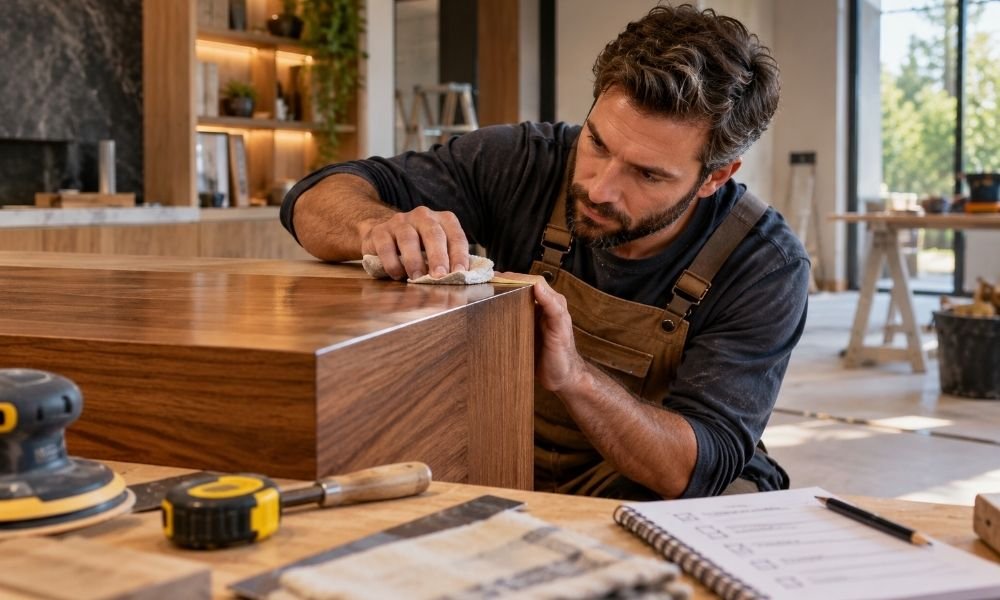
Imagine a carpenter who builds a custom table. The wood is strong. The joints are firm. The size is perfect. From far away, the table looks ready. But when the buyer touches it, the edge feels sharp. One corner has a light scratch. The varnish is uneven. The table still works, but it does not feel finished.
That moment teaches the real value of acamento. Finishing is not only about beauty. It is about comfort, safety, pride, and trust. The buyer may not know the name of the wood joint. They may not understand the tool used to cut the frame. But they can feel a rough edge in one second.
This happens in many fields. A room can have expensive tiles but poor grout lines. A website can have good information but confusing buttons. A product box can contain a strong item but look cheap because the label is crooked. Acamento is the stage where the maker asks, “Will this feel complete to the person using it?”
Acamento Is Quality Control, Not Decoration
One common mistake is thinking that finishing is only decoration. That is too simple. Decoration may improve appearance, but acamento goes deeper. It checks whether the final result is usable, consistent, safe, and ready for real life.
In building work, finishing can include paint, flooring, fittings, edges, surfaces, and final checks. In furniture, it may include sanding, sealing, polishing, and checking balance. In digital work, it may include proofreading, spacing, mobile testing, loading speed, image quality, and button behavior. These details affect how the project performs.
A poorly finished project can create extra costs. A small crack can grow. A weak seal can let in water. A sharp edge can hurt someone. A confusing checkout button can lose sales. A spelling mistake on a service page can reduce trust. These are not small problems when they affect the user’s decision.
Good acamento works like a quiet inspection layer. It asks what might go wrong after the main work is done.
Why Rough Edges Reduce Trust
Trust is built through signals. People do not always know how to measure technical quality, so they judge visible signs. Clean lines, smooth surfaces, working links, balanced spacing, clear labels, and careful handover all send one message: someone cared.
Rough edges send the opposite message. They make people wonder what else was missed. If the paint line is poor, was the wall prepared correctly? If the website has broken links, is the business active? If a cabinet door is loose, were cheaper parts used? One small issue can create many doubts.
This is why acamento can make or break a project. It does not only improve the final look. It protects confidence. A client may forgive a visible delay if the final result feels complete. But they may not forgive a rushed finish after waiting weeks.
The Hidden Business Benefit of Better Finishing
Good finishing can also support business value. A finished project is easier to sell, easier to recommend, and easier to remember. When people feel that a job is complete, they are more likely to trust the maker and talk about the result positively.
For contractors, acamento can reduce complaints. For designers, it can improve portfolio quality. For website owners, it can improve user experience. For product sellers, it can make a product feel more premium without changing the core function.
This is important because many buyers compare projects emotionally. Two rooms may have similar materials, but the room with cleaner details feels more expensive. Two websites may offer similar services, but the one with clearer layout and smoother pages feels more professional. Two products may work the same way, but the one with better final finish feels more reliable.
The benefit is not magic. It comes from removing friction. Good acamento makes the user stop noticing problems.
Acamento in Construction and Home Projects
In construction, finishing is often the stage people remember most. Walls, floors, tiles, trims, doors, windows, fixtures, and paint are the parts people see every day. Structural work matters deeply, but most homeowners do not inspect beams or wiring during daily life. They notice the floor under their feet and the wall in front of them.
Poor finishing can make a new space feel old before its time. Uneven tiles, weak corners, patchy paint, rough plaster, gaps around fittings, or badly installed trim can make even a costly renovation feel cheap. Good finishing does the opposite. It makes the space feel calm, ready, and cared for.
A smart homeowner should not treat acamento as an afterthought. It should be planned early. Material choices, labor skill, timeline, lighting, and final inspection all affect the result. Rushing at the end can damage months of work.
Acamento in Digital Projects
Acamento also matters online. A website may have all the pages it needs, but that does not mean it feels finished. A blog post may have enough words, but it may still need better headings, cleaner flow, image checks, and a stronger meta description. An app may have core features, but users may leave if buttons are unclear or screens feel messy.
Digital finishing includes details like mobile view, page speed, grammar, image size, link checks, heading order, contact forms, navigation labels, and trust signals. These details can decide whether a visitor stays or leaves.
This is especially important for small websites. Many site owners focus on publishing fast. That helps growth, but weak finishing can hurt the reader experience. A simple page with clean acamento can feel more trustworthy than a complex page full of mistakes.
Why Teams Often Rush the Final Stage
The final stage often suffers because people feel tired near the end. Budget is low. Deadlines are close. Everyone wants to launch, publish, deliver, or move to the next job. That is when finishing mistakes happen.
This is also when the project needs patience. The last stage is not just cleanup. It is the moment when the work meets the user. A rushed ending can waste the energy spent at the start.
The best teams build acamento into the schedule. They leave time for checking. They walk through the project with fresh eyes. They test the result like a real user. They fix small defects before handover. This habit turns finishing from a panic stage into a normal part of quality control.
Simple Acamento Checklist for Better Results
A useful acamento check starts with five questions. First, does the project look complete from a user’s point of view? Second, does it feel safe and comfortable to use? Third, are the visible details consistent? Fourth, are there small issues that could become bigger later? Fifth, would you be proud to show this work as your final result?
For physical projects, check edges, joins, surfaces, paint lines, fittings, balance, stains, dust, and protection. For digital projects, check links, spelling, mobile layout, images, buttons, page titles, meta descriptions, forms, and loading speed. For written content, check clarity, heading flow, keyword use, grammar, facts, and reader value.
This checklist is simple, but it changes the mindset. It moves the question from “Is the work done?” to “Is the work ready?”
Final Thoughts
Acamento may be a confusing word online, but the idea behind it is clear and valuable. It is the final care that makes work feel complete. It is the difference between rough and ready, between acceptable and trusted, between almost done and truly finished.
The last 5% of a project should never be treated as small. It is where people touch, see, judge, and remember the work. Good finishing protects value. Poor finishing creates doubt. Whether the project is a room, a table, a website, an article, or a product, acamento can make or break the final result.
A strong project does not end when the main work is complete. It ends when the final details prove that the work was done with care.
FAQs
1. What does acamento mean in simple words?
Acamento can be understood as the final finishing stage of a project. It means the last layer of care that makes something feel complete, polished, and ready to use. The word is often connected online with the Portuguese word acabamento, which means finishing or final treatment. Since “acamento” itself is not clearly confirmed as a standard word, it is best to use it carefully and explain the meaning in context.
2. Why can acamento make or break a project?
Acamento can make or break a project because people often judge quality through final details. They may not see the hidden structure, planning, or technical work, but they notice rough paint, loose fittings, broken links, sharp edges, poor spacing, or spelling mistakes. These small problems can reduce trust. Good finishing makes the project feel complete, safe, and professional.
3. Is acamento only important in construction?
No. Acamento is useful in many fields. In construction, it may mean paint, flooring, trim, tiles, and fixtures. In furniture, it may mean sanding, sealing, polishing, and edge work. In digital projects, it may mean proofreading, layout checks, mobile testing, link checks, and user experience improvements. The main idea is the same: final details affect final quality.
4. What are common acamento mistakes?
Common acamento mistakes include rushing the final stage, ignoring small defects, choosing cheap finishing materials, skipping inspection, and failing to test the project from the user’s point of view. In physical work, this can mean gaps, scratches, uneven surfaces, weak seals, or poor paint lines. In digital work, it can mean broken links, slow pages, bad formatting, unclear buttons, and missing SEO details.
5. How can someone improve acamento before finishing a project?
The best way to improve acamento is to create a final inspection checklist before the project starts. Leave time for review. Look at the project like a user, buyer, or client. Check visible details, comfort, safety, function, and consistency. For websites and articles, review mobile layout, spelling, links, headings, images, and meta details. For physical projects, inspect corners, surfaces, edges, fittings, color consistency, and durability.