
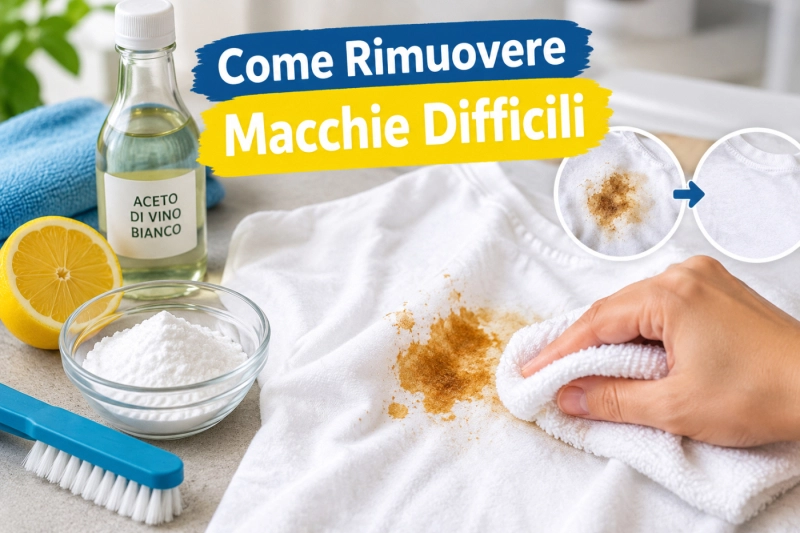
If you searched for come rimuovere macchie difficili (Italian for “how to remove tough stains”), here’s the core answer: identify what the stain is made of, flush it with cold water as soon as you can, then match the treatment to the chemistry. Enzymes break down protein, dish soap lifts grease, oxygen bleach fades color stains, and rubbing alcohol dissolves ink. And keep heat away until the stain is completely gone.
That last rule saves more clothes than any product.
Most “stubborn” stains aren’t actually stubborn. They’ve just been treated with the wrong thing, or run through a hot dryer before anyone checked.
Why Do Some Stains Refuse to Come Out?
Because different stains bond to fabric in different ways. A trick that dissolves one can lock another in place.
Almost every household stain falls into one of four families:
- Protein stains: blood, sweat, egg, milk, baby formula, grass (partly). Heat cooks the proteins into the fibers, the same way an egg white turns solid in a pan.
- Oil and grease stains: cooking oil, butter, salad dressing, lipstick, motor oil. Water slides right off them, which is why rinsing alone does almost nothing.
- Tannin and dye stains: coffee, tea, red wine, fruit juice, cola. These are colored plant compounds that soak into fibers like dye.
- Combination stains: chocolate, gravy, ketchup, makeup. These contain two or more of the above, so you treat them in stages, usually grease first, then color.
Here’s a quick example. Spill a latte on a white shirt and you’ve got three stains in one: tannin from the coffee, protein from the milk, and fat from the milk. Treating it with hot water and bar soap would set two of the three.
So before reaching for anything, ask one question: what’s this made of?
What Should You Do First With Any Fresh Stain?
The first five minutes matter most. Follow this order:
- Scrape or lift off any solids with a spoon or the edge of a card. Don’t smear.
- Blot, don’t rub. Press a clean white cloth or paper towel onto the stain to soak up liquid. Rubbing spreads the stain and roughs up the fibers.
- Flush with cold water from the back. Turn the fabric inside out and run cold water through it. This pushes the stain out the way it came in, instead of deeper.
- Check the care label. “Dry clean only,” silk, wool, or leather change everything (see the last section).
- Test your treatment on a hidden spot, like an inside seam, and wait 5 minutes for color change.
- Treat, then wash in the warmest water the label allows, unless it’s a protein stain, which stays in cool water.
Then air-dry. Check the spot in daylight before it goes anywhere near a dryer.
Come Rimuovere Macchie Difficili: The Stain-by-Stain Table
Here’s the cheat sheet. Save it, print it, stick it inside a cabinet door.
| Stain | Type | First move | Best treatment | Avoid |
|---|---|---|---|---|
| Red wine | Tannin | Blot, cold water flush | Dish soap + 3% hydrogen peroxide (on whites/colorfast) or oxygen bleach soak | Hot water, salt rubbed in hard |
| Coffee / tea | Tannin | Cold water flush | Liquid detergent, then oxygen bleach soak | Bar soap (can set tannins) |
| Blood | Protein | Cold water only | Enzyme detergent or 3% hydrogen peroxide | Any heat |
| Sweat (yellow) | Protein + deodorant | Rinse cool | Oxygen bleach soak, 1–6 hours | Chlorine bleach |
| Grease / oil | Oil | Blot, sprinkle cornstarch | Dish soap worked in, then hot wash | Water alone |
| Ballpoint ink | Dye + oil | Blot, don’t wet | 70% rubbing alcohol, dabbed | Rubbing, water first |
| Grass | Protein + dye | Cool rinse | Enzyme detergent, then alcohol if green remains | Hot water |
| Lipstick / makeup | Oil + pigment | Scrape | Dish soap or micellar water | Rubbing |
| Rust | Mineral | Keep dry | Lemon juice + salt, or oxalic acid cleaner | Chlorine bleach |
| Turmeric / curry | Dye + oil | Scrape, dish soap | Dish soap, then dry in sunlight | Hot dryer |
| Gum / candle wax | Solid | Freeze or harden | Scrape; iron wax out through a paper bag | Pulling while soft |
If you remember just one column, make it “Avoid.” Most ruined garments come from what people did, not what they failed to do.
How Do You Remove the Toughest Stains?
These seven are the ones people search for most. Each has a method that works and at least one popular myth that doesn’t.
Red wine and coffee
Both are tannin stains, so the approach is similar.
- Blot immediately, then flush with cold water from the back.
- For whites or colorfast fabric, mix 1 teaspoon of dish soap with 2 tablespoons of 3% hydrogen peroxide. Dab it on, wait 10 to 15 minutes, and rinse.
- For colors, soak in oxygen bleach (like OxiClean) dissolved in warm water for 1 to 2 hours.
- Wash normally and air-dry.
What about club soda? Honestly, it’s mostly water. It helps about as much as plain cold water, because the real win is acting fast. And skip bar soap on tea and coffee: traditional soap can set tannin stains.
Blood
Cold water, always. Even warm water can start cooking the proteins.
Soak the fabric in cold water for 30 minutes, then rub a little enzyme detergent (look for “protease” or “enzymes” on the label) into the spot. For stubborn marks on whites, dab on 3% hydrogen peroxide. It fizzes as it works. Rinse and repeat until the fizzing stops.
Peroxide can lighten some dyes, so test colored fabric first.
Grease and cooking oil
This is where dish soap earns its place under the sink. It’s designed to break up fat, which is exactly the problem.
- Blot excess oil, then cover the spot with cornstarch or baking soda for 15 minutes to absorb more.
- Brush it off and work in a few drops of dish soap with your fingers or a soft toothbrush.
- Let it sit 10 minutes.
- Wash in the hottest water the label allows. Grease is the one stain type that heat actually helps.
A splash of olive oil on a cotton T-shirt usually disappears in one round this way.
Ballpoint ink
Ink needs a solvent, and 70% isopropyl (rubbing) alcohol is the cheapest one that works.
Put a folded paper towel under the stain. Dab alcohol on with a cotton ball and keep moving to a clean part of the towel as the ink transfers. Then wash.
The old hairspray trick? It worked because older hairsprays were mostly alcohol. Many modern ones contain far less and leave sticky residue. Use the alcohol directly.
Yellow sweat stains
Those yellow underarm marks on white shirts come from sweat proteins reacting with aluminum compounds in antiperspirant. They build up over months.
The fix that works:
- Dissolve oxygen bleach in warm water, following the package dose (usually about one scoop per gallon).
- Soak the shirt for 1 to 6 hours. Heavily yellowed shirts may need overnight.
- Scrub the area with a paste of baking soda and a little dish soap before washing.
Don’t use chlorine bleach here. It reacts with the proteins and can make the yellow darker, the opposite of what you want.
Rust
Rust is a mineral stain, so detergent barely touches it. You need an acid.
Squeeze lemon juice over the spot, sprinkle with salt, and let it sit for 30 minutes to an hour, ideally in sunlight. For stubborn rust, products containing oxalic acid (Bar Keepers Friend is a common one) work well on sturdy cotton.
Never use chlorine bleach on rust. It can turn the stain permanent.
Turmeric and curry
Turmeric is famous for staining everything: countertops, plastic containers, and especially white kitchen towels.
Scrape off the excess, work in dish soap to break up the oil the spice is suspended in, and rinse in cool water. Then here’s the part most guides miss: dry it in direct sunlight. The pigment in turmeric fades under UV light, and an afternoon on a sunny windowsill often finishes the job when nothing else will.
What About Old, Set-In Stains?
Set-in doesn’t always mean permanent. It means you’ll need patience.
The most reliable method for washable fabrics:
- Rehydrate the stain with cool water.
- Apply the right pretreatment from the table above and wait 30 minutes.
- Soak overnight in oxygen bleach and warm water (6 to 8 hours).
- Wash and air-dry.
- Repeat 2 or 3 times if the stain fades but doesn’t vanish.
Realistically, an old coffee stain on cotton often comes out fully. A blood stain that went through a hot dryer a year ago may only fade. Stains that have been ironed are the hardest of all.
But it’s worth trying before you throw anything out. An overnight soak costs about 20 cents in oxygen bleach.
What Should Be in a Basic Stain Kit?
You don’t need a cabinet full of specialty sprays. This kit covers almost every stain in the table, for roughly $25 to $30 total:
- Dish soap (about $3–4): grease, oil, makeup, turmeric
- 3% hydrogen peroxide (about $1–2 per bottle): blood, wine, and coffee on whites
- 70% isopropyl alcohol (about $3): ink, grass, some dyes
- Oxygen bleach powder (about $10): soaks for tannins, sweat, and old stains
- Enzyme laundry detergent (whatever brand you already use, if it lists enzymes): protein stains
- Baking soda and cornstarch (a couple of dollars): absorbing oil, scrubbing pastes
- White vinegar (about $3): rinsing out residue and odors
- White cloths, a soft toothbrush, and a spray bottle
One safety rule that matters: never mix chlorine bleach with ammonia or vinegar. Both combinations release toxic gases. Keep chlorine bleach on its own shelf.
With this kit, most people can handle the question of come rimuovere macchie difficili at home without buying a single “miracle” product.
Which Mistakes Make Stains Permanent?
These are the habits that turn a fixable stain into a permanent one:
- Putting it in the dryer. Dryer heat sets nearly every stain type except grease. Always air-dry and check first.
- Using hot water on protein. Blood, egg, dairy, and sweat need cold.
- Rubbing hard. It spreads the stain and damages fibers, leaving a fuzzy patch even after the color is gone.
- Ironing over a spot. Heat plus pressure locks it in.
- Reaching for chlorine bleach first. It worsens rust and sweat stains and strips color from anything that isn’t white cotton.
- Using too much product. A ring of leftover detergent can attract dirt and become its own stain.
- Skipping the patch test. Peroxide and alcohol can both lift dye from some fabrics.
If you avoid just the first two, you’ll save most of your clothes.
When Should You Stop and Call a Pro?
Some fabrics aren’t worth the home experiment. Take these to a dry cleaner and tell them exactly what the stain is and what (if anything) you’ve already tried:
- Silk and wool: These are protein fibers. Enzyme detergents, which digest protein, can damage them.
- Leather and suede: Water alone can leave a permanent mark.
- Anything labeled “Dry clean only” with a large or oily stain.
- Vintage, embroidered, or sentimental pieces, like a wedding dress or a grandparent’s tablecloth.
- Upholstery or rugs with stains bigger than your palm.
A good cleaner can identify fibers and dyes you can’t see, and spot treatment is usually a small add-on to a normal cleaning bill. For a $300 silk dress, that’s an easy call.
6. FAQ
What is the best way to remove tough stains from clothes? Identify the stain type first, then flush it with cold water from the back of the fabric. Use enzyme detergent for protein stains, dish soap for grease, oxygen bleach for tannins like coffee and wine, and rubbing alcohol for ink. Air-dry and check the spot before using the dryer.
Does hot or cold water remove stains better? Cold water is safer for most stains, especially blood, sweat, egg, and dairy, because heat sets proteins into the fabric. Grease is the main exception, since it washes out better in hot water after pretreating with dish soap. When unsure, start cold.
Can you remove a stain after it’s been through the dryer? Sometimes. Rehydrate it, pretreat it, and soak it overnight in oxygen bleach, repeating two or three times if needed. Tannin stains often come out fully, while heat-set protein stains may only fade.
Is hydrogen peroxide safe on all fabrics? No. Standard 3% hydrogen peroxide is safe on most whites and many colorfast fabrics, but it can lighten some dyes. Always test it on a hidden seam first, and avoid using it on silk and wool.
Does vinegar remove stains? White vinegar helps with some stains, like sweat odor and detergent residue, and works as a mild rinse. It’s not strong enough for most tough stains on its own. Never mix it with chlorine bleach, since that releases toxic chlorine gas.
How do you get yellow sweat stains out of white shirts? Soak the shirt in oxygen bleach dissolved in warm water for 1 to 6 hours, then scrub the area with a paste of baking soda and dish soap before washing. Avoid chlorine bleach, which can react with sweat proteins and darken the yellow.
7. Conclusion
Tough stains mostly come down to two decisions: what the stain is made of, and whether you keep heat away from it. Get those right and cheap pantry staples will handle nearly everything. If you remember one rule from this guide on come rimuovere macchie difficili, make it this: never put a stained garment in the dryer until the stain is completely gone.